Showing posts with label frugality. Show all posts

Thursday, 6 September 2012

Advertisements that only work due to ignorance and stupidity

I don't generally see a lot of ads, thanks to AdBlock on the computer and a RePlayTV unit that automatically skips them when I watch an occasional show, but between Hulu, the few that get past the RePlay's filters, and billboards, I can't seem to escape them entirely.
Which is fine, they are paying for me to have free content, some of them are entertaining, and every once in a great while actually informative.

But there are 3 out right now which grate against me so severely that the only way I'm going to be able to stop ranting in my own head about them is to rant on the internet.

They are deliberately relying on consumer's ignorance in order to try to convey a message which simply isn't there - the facts are technically accurate, but the implication is actually the exact opposite of reality.


1) The new milk campaign, attempting to discredit soy milk:


They list a bunch of scary sounding "chemicals" that soy milk contains, to contrast with cow milk, which according to the ingredient list has only one ingredient: "milk".
Never mind that the list of scary sounding chemicals they list consists almost entirely of vitamins and minerals which are actually quite healthy, or neutral at worst.

So, in the interest of fairness, here are some scary sounding chemicals that are present in cow's milk:


  • oligosaccharides
    galactose
    pantothenic acid
    phosphorus
    selenium
    manganese
    lipoprotein lipase
    inactivated alkaline phosphatase
    lactoperoxidase
    C16:0 ß-hydroxy fatty acids
    conjugated linoleic acid*
    α-lactalbumin
    blood serum albumin
    transferrin
    high proline micelle
    methionine
    cholin
    cerebrosides
Golly.  Don't all those chemicals sound unknown, and therefor scary? 


*(which is a TRANSfat omg!!!!!!!! - but wait, aren't transfats all man-made and added by the evil food industry????  What?  Some transfats are naturally occurring? How can that be, when everything natural is good and healthy, and all transfats are devil food??)


2) 5-hour energy:


73% "said they would recommend a low-calorie energy supplements to their healthy patients who used energy supplements. 73%!"
Wow!  That's a C- grade.
Ok, so never mind that 73% is not particularly impressive.

Never mind that if it has no calories it has no actual energy.  It may make you feel energetic, but the human body gets its energy from calories, not stimulants.  (Don't believe it, try going on a fast where you consume nothing but cocaine for a few months)

And never mind that almost 1/2 the doctors they tried to survey refused to participate in the first place...


They worded it pretty carefully.  Sounds like they handed out a survey that said "if you had a patient who was determined to take an energy supplement, would you recommend that it be low calorie?"
Well, sure, given that constraint, of course.
Just like IF you have a patient that smokes, you might recommend that at the very least they smoke light, filtered cigarettes.  That's not exactly an endorsement.
And even with that particular wording, 27% still wouldn't recommend it.
But wait - there's more!
If you read the fine print, even among those who would recommend low calorie energy supplements to patients who are going to take energy supplements anyway, after reviewing the ingredients of the specific 5-Hour Energy brand, 45% of them would NOT recommend it!  45%!

So, assuming that the 1/2 of doctors who refused to dignify their survey with an answer would not have been impressed, you have 50% (number who answered at all) x 73% (number who said yes to low calorie) x 55% (number of those who said yes to the brand) = 20% who actually said they would recommend the product IF a person was dead-set on using an "energy supplement".

We can only assume that the number who would recommend it to a patient who wasn't already on legal stimulants is approximately 0%


3) No On Beverage Tax


This is a local one, but similar measures are being proposed all over.
It isn't even a ballot measure yet, but the soda industry and retailers are fighting it preemptively.  In theory it would tax beverages with added sugar by one penny an ounce.

The ad claims that it would "hit the city’s poorest residents and the elderly the hardest"

Because, you know, poor people and old people are legally mandated to drink nothing but soda. 
Or is it that their unique physiological properties make it that the empty calories in soda are actually a nutritional requirement? 

Ah, I know - some people are SO poor that, not only aren't there supermarkets nearby with real juice, they don't have running water, so their only source of liquid is the soda they buy at the gas station.

Wait... what?  Gas stations and corner stores sell not only 100% juice, but also bottled water? Hmm....

Whoa, whoa, whats that!?  Running water is legally required in all rental units, including the projects and even homeless shelters, and many if not most renters don't actually pay for metered water?  Are you saying all these poor people could actually be drinking water for FREE?

And even if one does pay metered rate for tap water, its cost is between one half to 5 cents a gallon?  Now you are just being silly. 
That would mean that even without the tax, generic brand soda costs roughly 35 times as much as tap water for the exact same nutritional value. 
Gosh, so maybe drinking water would save more money than traveling to a city without a beverage tax to find cheap soda, as the ad campaign suggests is the only possible alternative.


I suppose its good that we have any truth in advertising laws at all, but I really think we need to take the next step and ban "technically accurate but deliberately deceptive and misleading in it's implications" advertising as well.

Wednesday, 2 May 2012

Jacob Aziza / Bakari Kafele; Ecomodder / Hypermiler

Jacob Aziza / Bakari Kafele; Ecomodder / Hypermiler

by Bakari Kafele on May 2, 2012
Good morning fellow ecomodders, hypermilers, and efficiency enthusiasts of all kinds.
The EcoModder blog has been inactive for over a year (save Tim’s two most recent updates), and I have been asked to help pick it up again.
So, since I also have not been active on this site for nearly a year, to start I thought I would re-introduce my self:
My name is Bakari Kafele.  My internet screen name (or at least one of them) is Jacob Aziza.
You may remember me from such internet sites as the EcoModder Forum and Instructables.com
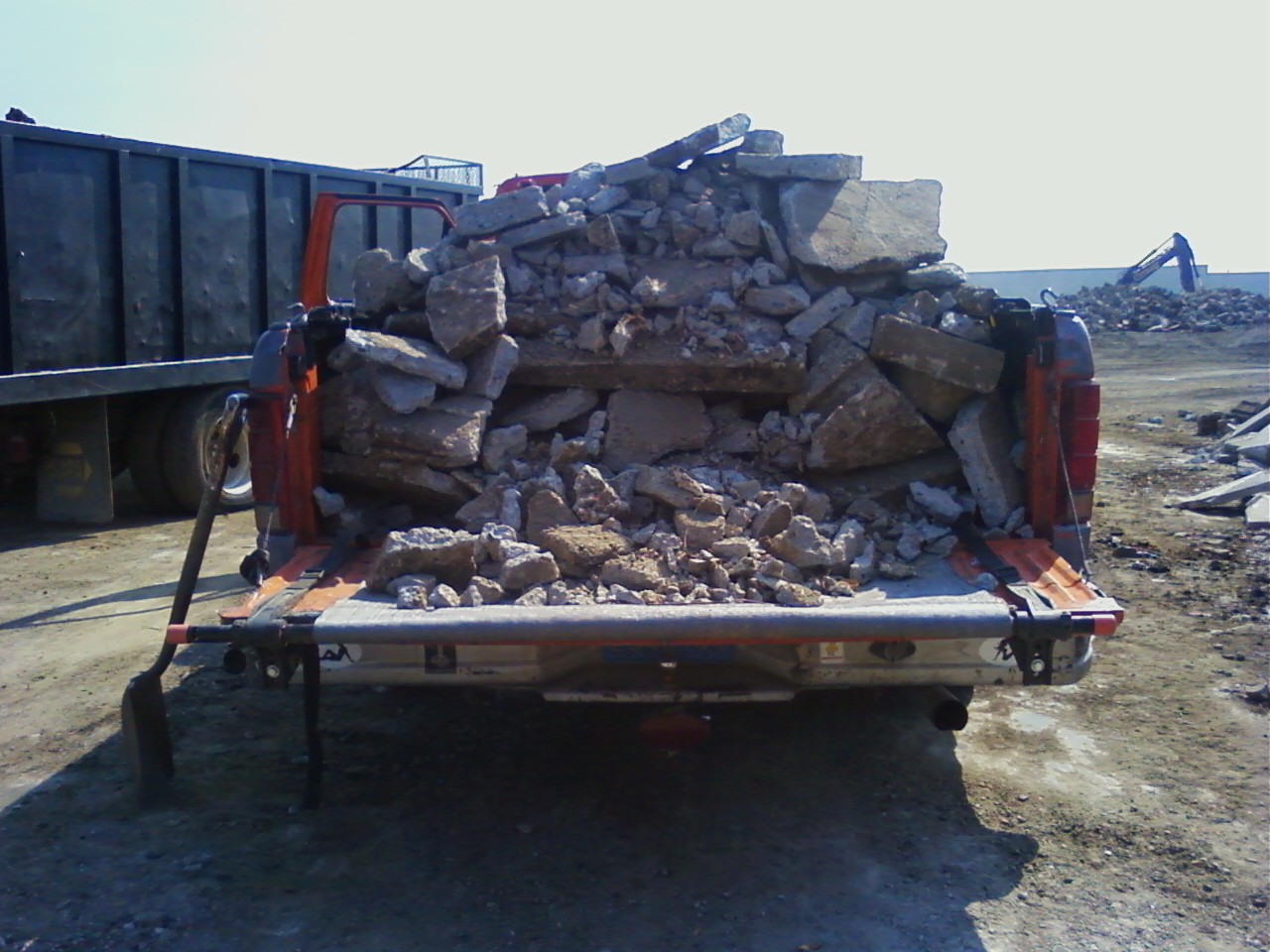
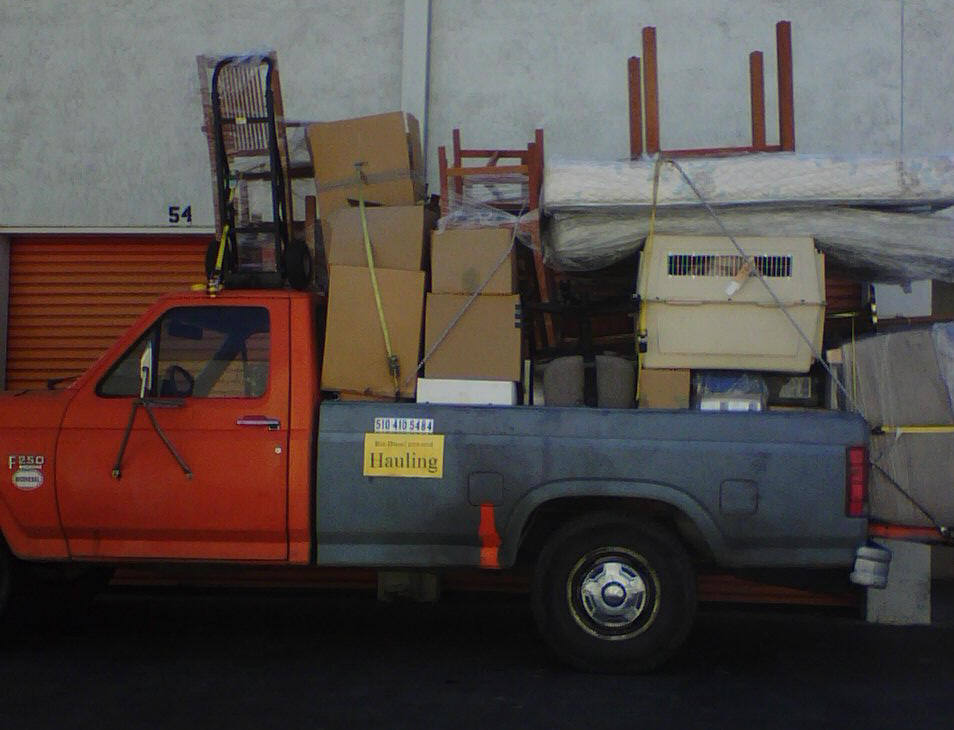
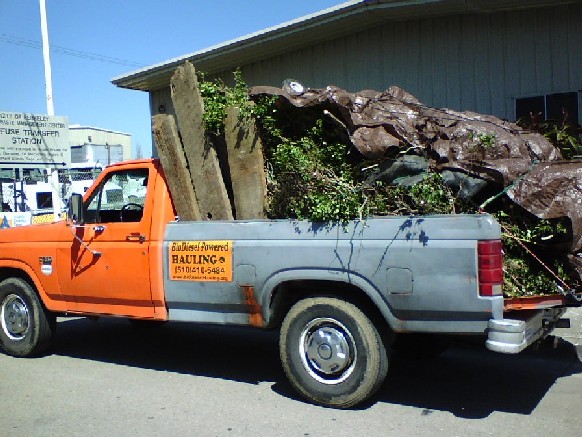
I have an old (1983) full-size truck with a 6.9L diesel V8 that I use for deliveries and hauling and occasionally towing.  It would be a monstrosity for a commuter vehicle, but it’s about the smallest thing that could serve my work needs – most people hauling large or heavy loads (see below) would use a box truck, a flat bed, or maybe even a dump truck.


At the very least an F-350 or equivalent1-ton pick-up.
So, depending on how you look at it, getting 15 miles per gallon, (as I was five years ago), could be considered decent, given the type of work being asked of this old truck – 15 mpg being what I measured I was getting, which coincided more or less with what most people report getting in the same make model and year truck.
Then, in 2008, I read an article about Wayne Gerdes…


I found it to be revolutionary and inspirational.  It was one of those moments where it seemed like the idea should have been glaringly obvious all along, and yet somehow never occurred to me.  Slow down, accelerate with moderation, coast early instead of braking last minute.  Obvious stuff, right?
While I had always been environmentally conscious (I was running the truck on biodiesel most of the time,  and my personal transportation was – and is – mostly done by bicycle), I had also been a speed enthusiast in my youth.  The only reason I gave up on casual street racing, drifting, and other performance and trick driving in my Honda Civic was that I totaled it when I attempted to take a tight turn (the sign recommended 20MPH) at 55MPH.
I never put two and two together; never recognized the direct correlation between driving habits and resource consumption.
After reading the article, my driving habits underwent a 180 degree turn.
Despite having once received a letter from the DMV warning me that I was one point away from a suspended license, I now started driving below the speed limit, anticipating stops, and even coasting.
And after a few months, I was pulled over by the CA Highway Patrol once again.
Not that driving 50MPH on a 65MPH highway is actually illegal in CA; but because EVERYONE speeds here, all the time, the officer assumed I must be intoxicated to actually drive below the speed limit.  When I passed the breathalyzer, I was free to go.
I found that to be a (tragically) funny thing – I am surrounded by people breaking the law.  I am the one person NOT breaking the law.  And I am the one who gets stopped by law enforcement, because it is suspicious that I am not breaking the law like everyone else.  I thought that would be an interesting story to share, especially with people who were also trying to get the best possible fuel mileage from their own vehicles.
So I went online, and tried to find out if there were any discussion boards specifically dedicated to this “hypermiling” thing.
And that’s how I discovered:  EcoModder.com
Wow.  A whole new level.  Not only were there dozens of more in-depth secrets to driving technique, but people were actually modding their cars – not to make them faster or look cooler – but to actually make them more efficient.  Revolutionary, mind-blowing, and in the end as it turned out, life changing.
I won’t chronicle the entire process here, because I already did in the forums, as it was happening.
During this process a friend of mine (and fellow mechanic at the bikeshop I work at) convinced me to write about my truck mods for Instructables.com.
They happened to be doing an energy efficiency contest at the time, which I entered and took second place in, winning a T-shirt!
But even better, the founder and CEO of the company noticed my contest entry, and personally hired me to do a little work at his home.  How cool is that?
Throughout this time period, I had also been writing my own personal blog, and one of the founders of faircompanies.com, Kirsten Dirksen, happened to run across my article on anthropogenic global warming, in which I argue that the evidence is still inconclusive, but we should be acting as though it is true regardless of what science eventually finds.  She asked if I would post some of my content on their website, which I began doing.
About a year or so later she emailed me saying they were taking a trip to the US (from Spain) and asking if I would be willing to be interviewed on camera.
I was still new to hypermiling and hadn’t started ecomodding when the video was taken, so while I did mention driving the smallest vehicle that meets ones needs, fuel efficiency, and bicycles, the portion on my small home got most of the attention.
As my ecomodding habit began, since I was already posting eco related content to the Faircompanies website, Kirsten followed the development of the truck, and its transition from 15mpg to up to 30mpg. The next time she came to the US, several years later, she requested a follow up interview – and the new video which came out recently is all about hypermiling and ecomodding.

That brings us to today.
I recently looked into replacing the rear differential, as was suggested to me in the forums, but it turns out the 2.73  and 3.08 were never made for the stronger 8 lug / F-250+ wheels.  So I’m back to wanting to replace the transmission with one that has overdrive to lower my highway RPMs, but I haven’t found a diesel ZF with the granny gear yet.
I’ve been getting slightly lower mileage than my peak, just over 25 miles per gallon over the past 6 months, VS 29MPG average over the 6 months before that – but still a whole lot better than the 15MPG I started out at.
Inline image 1
I suspect this is mostly due to having re-installed the alternator after my onboard 120v charger died, and being lazy about pulse and glide (as in, not doing it at all).
Between the video coming out and writing here, I’ve been more motivated to get my mpgs back up.
I’ll let you know how that goes.
UPDATE – I recently replaced all four tires with the General Grabber HTS, which is one of only two brands that is supposedly low rolling resistance in a tire with a 120 load rating.  I have only had them on about a week, so its too soon to say if/how much they will help (they are replacing on/off road tires in back, and dangerously worn road tires in front) – but what I can say is that the first time I drove with them fully inflated (the shop of course only inflated to 50 – even though I specifically asked them to go to the sidewall max of 80PSI) it was so easy to turn the (manual) steering wheel that for a split second I actually thought there might be something wrong.  I had gotten used to the old tires, and these ones turn with so little resistance that it feels like power assist by comparison.  That feels like a good sign to me.
I also just received my new battery charger (yesterday!) so I can take the alternator belt back off.  Between the two, I’m hoping to hit my 5th 30+mpg tank average – and then keep it there.  We’ll see…

Wednesday, 24 November 2010

Minor celebrity

Minor celebrity


I guess I'm not all that surprised.

A video I did for an environmental blog (faircompanies.com) was posted on youtube.

http://www.youtube.com/watch?v=EJc8973GURk
It is almost up to a quarter million views!
I have been getting people all over the country tracking me down on Facebook and asking to be friends and asking questions after the see it.
Since there are probably plenty of people with the same questions who don't go to the trouble to track me down, I'm reposting my answers to some of those questions here:

----------------------------------------------------------------------------------


I can't believe how popular that video has become.  It was done with no preparation, no script, no practice, really not even a clear focus (they split the interview into 3 parts, but the other two never gained any viewers)

Its funny, I don't really even think of it as a "lifestyle".
I guess maybe because I've been doing it so long.
I bought a camper van right out of high school, which I slept in during the week to avoid having to commute to work. My girlfriend of the time went on a 2000 mile bike ride, and when she came back she suggested we get a full size RV and move in together. Eventually an opportunity arose to join a traveling carnival in the mid-west, so we set out across the country. We ended up spending a year on the east coast before moving back to the SF bay area. We upgraded to the trailer in the youtube video not long before we ended up getting divorced. For the past 4 years I've been in one place, and don't really consider the trailer to be a vehicle.

So I have been in 3 sizes and types of RV, full timed on the road and in trailer parks, and lived in different climates, different size cities, etc.

For the most part, living in an RV is a lot like living in a house. Driving an RV is like driving a car.

You know, I never thought of what I did as "scavenging" until that video was taken. I didn't come up with a script in advance, and was just making stuff up as I went along. I didn't know it was a movement either.

------------------------------..--------------------

In answer to specific questions:

This is my 3rd RV.

-Length: 35ft
-Width: 8ft (slide out covers living room and kitchen, bedroom is smaller)
(total of about 250 sq ft)
-Weight: 8500lbs
-Towing: My 1983 biodiesel powered F-250 can tow it.  However, I've only moved it twice.  It lives in the trailer park permanently.
-Purchased: Used in 2005 (it was made in 1995)
-Cost: $7,500
-Manufacturer: Jayco
-Model: Designer Series 3120 FK SS Travel Trailer

Prior to this one, I had a 1973 27' "Robinhood" Class C motorhome (purchased for $2500) which I shared with my (now ex) wife and two cats.
Before that I had a 1969 converted Dodge B100 utility van Class B motorhome, which I never officially lived in full time, but stayed in during the week to avoid a long commute.

My camper van was small and nondescript enough to get away with sleeping in parking lots or on the side of the road. Then I moved in with my fiancee, and we upgraded to the Class C motorhome, which was big and old and in moderate condition. We spent much more on repairs than it cost us to buy it, but we drove it across the country and back, and lived in it for about 5 years, including an east coast winter. I currently live in the 1995 35' travel trailer which you see in the video, which cost me $7500 and has had almost no problems since I bought it. It is very spacious, comfortable, and efficient, and I have done very little to it. I live in a trailer park, which means I have to pay rent, but also that I have a permanent (legal) place to stay, access to water, sewer, electricity, phone, internet, and mail.

I lived for about a year in Northern NJ (just east of the Lincoln Tunnel) in the 27ft Class C.
Our sewer pipes froze, the cat's water dish froze, the solar panel on the roof got snowed over and the batteries died.  The temperature was regularly below 0 all through the winter.  I haven't lived anywhere where it gets above 100 regularly, but I stayed in a spot in CA that hit high 90s in the summer.
The RV was insulated, double walls with fiberglass in between, just like a house.  I'm fairly certain all modern RVs are.  They are also easier to heat and cool just because they are small, so there is much less air space.  In addition I tinted the windows to retard radiant heat loss.  When we were parked in NJ, I added rigid foam insulation all around the bottom outside of the RV, covering the wheel wells and trapping an air space under the RV.  I routed the furnace exhaust into this space so it would heat the floor and not just be wasted.  It was our first time living in snow, so we had no idea what we were doing (they make heaters specifically for pipes!) but once we got all the details worked out, we were able to live very comfortably.

My current rig is in a park in the San Francisco Bay Area in CA, and the weather stays nice here.  I very rarely turn on the central furnace, opting to use a cheaper and more efficient electric space heater (to heat only the room I'm in).  Now that I upgraded to a instant (tankless) waterheater, I am only refilling my propane about once or twice a year ($40).  I do still use the air conditioning when its hot.  Sometimes I end up paying $10 a month for electricity instead of $5.

I never expected so much feedback from that video!  I am happy to know it is inspiring people.  Feel free to ask anymore questions you may have if you go forward with it!

------------------------------..--------------------------
So, you are inspired to look into living small (and mobile)...

Where to start:
Decide the basic type you want. There are 6:

Class A - great big motor RV based on a bus body
Class C - slightly smaller motor RV, with an overhang above the driver compartment
Class B - much smaller motor RV, basically a large van
Travel Trailer - gets towed with a standard hitch
5th Wheel - has a hitch similar to a semi truck - need a special mount installed in the pickup that tows it - usually larger than travel trailers
Pop-up trailer (or tent trailer)- a travel trailer, but one that folds down for easy transport, walls are made of fabric
Camper Shell - entire RV installs on the back of a pick up truck.

They all have to be registered, whether or not they are driven (although on parked on private property, that is rarely - if ever - going to be enforced). If it was parked you could register it as not being driven for a discount (this is all in CA, I don't know about other states.) If you are just traveling through, its fine to just be registered in your home state (even if "traveling through" means staying for several months, or even years in most cases).
Motorhomes have to be insured if they are driven. Trailers don't (the tow vehicle needs to be insured). But its a good idea. I don't have full coverage on my truck, but my RV is my home, and cost me a lot of money, so I pay for the full coverage insurance. Plus, it also doubles as home owners insurance. Its less expensive than full coverage for a car or homeowners insurance.

Every style has its advantages and disadvantages. The main considerations are how much space do you want, and do you want it to be self-propelled or towed. If you plan to actually travel, a built-in engine (Class A B or C) is incomparably more convenient. If you plan to stay in one place, the engine in a motorhome just takes up space and makes it more expensive. The advantage of more size is, obviously, its more comfortable to live in and you can fit more stuff in it, but it becomes increasingly harder to drive, find a place to park, stay inconspicuous when parking on public streets, and is less efficient.

When I wanted to travel and stay low profile, I looked at motorhomes. When I wanted to stay in one place, I looked into trailers. With a motorhome driving is a lot easier. With a trailer you can separate the two and make use of the truck for errands or commuting.
Aside from that, the main considerations are size, age, and price. Size is a compromise between fuel efficiency (and easy of finding parking) and comfort.

Another huge consideration is your budget. The newer you can buy, the less maintenance and repair headaches you will have. Newer will be more expensive up front, but it can be worth it. A motorhome is always more expensive than a trailer. The bigger the RV, the more it will cost. A higher quality RV will have more insulation, and more features (some of which are more useful than others).

All RVs are energy efficient, by their very nature. They are designed so that you can go out to the woods and live off of battery power and stored water for a week or two, so they have to be. There are ways to increase its efficiency even more (tinted film on the windows, LED lighting, instant water heater, solar panel), but it makes a lot less difference than it would in a house.

Its less expensive to heat and cool a small space, due to the fact that its a small space. Insulation still makes a big difference, and newer trailers do much better in that area than older ones. It also helps to put plastic sheeting over the windows (I use saran wrap) to make a cheap double pane, and to use spot heaters instead of the central furnace.

There are 2 types of trailer park. Mobile home parks are usually long term, and charge by the month, like an apartment. RV parks are short term, and charge by the day, like a hotel. They are geared toward vacationers, and are much more expensive.
On the road you will more likely come across RV parks.

You can also always park at Walmart. Their policy is that RVs can stay in their lots (as long as there is space) even if they aren't customers. That saves a lot of money on RV park fees. We would usually go to an RV park one or two days of the week in order to empty the waste tanks, fill the clean water, wash clothes...

Things that might not be obvious to someone just starting out:
Use RV specific toilet paper. Regular stuff will clog. You can get it at RV parks, RV supply stores, or walmart.
Drive slow. In a big square vehicle mileage and safety are both going to drop really fast with even small increases in speed. No more than 55mph, or 5mph under the speed limit, whichever is lower.
Try to drive with water tanks as low (or empty) as possible. The weight will affect mileage, handling, and braking distance. Keep tires fully inflated for the same reason.

I always use city water. Water in the US is safe to drink even in the worst cities. Bottled water has lower standards imposed on it, and is often tap water in a bottle. It is crazy inefficient. In a park you get pressure by hooking a garden hose up to the RV, the rest of the time you fill the water tank and use the onboard pump.

I am not familiar with purpose built "green" RVs, but I am familar with those systems. They would be fairly easy to retrofit (for much less money!!) if one wanted to. I have a instant water heater and am only spending about $40 a year on gas, so, although it would be cool to have a solar pre-heater, its really not worth it. Same with electricity - on my old RV I did install a solar panel, but in the new one I am only using around 50kWh a month, at $5 a month in electricity, I don't have much incentive to buy a $500+ solar system.

For the most part though, living in an RV is a lot like living in a house. Driving an RV is like driving a car.

RVs are terribly inefficient at driving. Here are some ideas of ways you could improve it:
http://ecomodder.com/forum/..showthread.php/okay-heres-..challenge-mod-my-winnebago-..1051.html

http://ecomodder.com/forum/..showthread.php/getting-..mileage-motorhome-9123.html

And, of course, my own page:
http://www.instructables.com/..id/Vehicle-efficiency-..upgrades/

Monday, 14 December 2009

Christmas Lights


  • Dec 14, 2009

Christmas Lights

So many people, when the subject of Christmas lights come up, they acknowledge they are nice, but go on to add "but they are a waste of energy".

As someone who feels strongly that American's use of energy and resources is morally unacceptable, I would like to be very clear about this:
Christmas lights are NOT a waste of energy.

That 80% of car trips have only the driver or a driver and one passenger, yet seat from 5-7 people is a waste of energy.  That we live, on average, 20 miles from our jobs is a waste of energy.  Uninsulated attics and unweather stripped doors and windows in houses and power steering and air conditioning in cars, all electric kitchens, and cars that weigh 50% more than they did 20 years ago and have 200% more power are all enormous wastes of energy.
Buying enormous amounts of crap that no one really needs and that get shoved into a closet or thrown out after a few weeks wastes energy in manufacture and transport.

Not one of those things provides any significant increase in quality of life.  None of them make people happy to be alive.  At most they provide a tiny increase in convince.  At worst they do nothing but cost money.  None of them create joy.


In a land where profit is considered the only motivating factor for nearly everything in life, filled with people who don't know their neighbors, where 50% of people can't be bothered to take the effort to use their turn signals, for a few weeks a year people do something with no financial benefit, no increase in comfort or convenience, no direct personal benefit.
You don't even see them from inside the house.  Everyone else passing by sees them.
They turn an ordinary neighborhood into a magical place.
They create joy.
Which makes them one of the few valid uses of energy in this country.
Because ultimately, making it enjoyable is really the only point there is to life. 

So go ahead and enjoy those giant flashy displays and don't for a second feel guilty about it.
Put up your own even.

You can get a strip of LED lights for less than $10 that use less than 5 watts of power, (far less than a single florescent light bulb).
I even found a set for under $5 that runs for days on just (rechargeable) AA batteries.

But LED or no, the lights are worthwhile and good.

A world without christmas lights is not a world worth saving.

Saturday, 26 September 2009

Spoiled: The Economic Downturn, Luxury as Necessity, and "Struggling" in the Modern Economy

  • Sep 26, 2009

Spoiled: The Economic Downturn, Luxury as Necessity, and "Struggling" in the Modern Economy

My original comment was not meant to imply I don't believe that there are tangible effects on people (most notably unemployment, which is certainly up compared to a few years ago).
All I said was that media and politicians largely made it up.  I think it is a self-fulfilling prophesy to an extent, where in people hear constant messages that times are tight, therefore they cut back on consumption, therefore retail markets fall, therefore manufacturers cut back, and employers start laying people off.  Which fuels the beginning of the cycle even more.  This is why business analysts track "consumer confidence".  In fact, to a large extent it is what the stock market is all about.  Its less a question of how well a company is doing and more one of how popular are they.  If people think its doing well, they buy, which itself drives the stock price up.  It works both ways, so if everyone is convinced the market is doing bad, they sell so they don't lose too much by waiting, and then companies don't have the capital to invest.

-


I think it is totally unreasonable to adjust what it means to be "poor" based on those around you.
If we did that, billionaires could claim to be poor if those around them are multi billionaires.  In fact, everyone except for the single richest person in the world would be "poor".
Clearly there should be some objective standard of poverty.
I think the only reasonable one is the point at which you have a reasonable fear of not being able to provide the basic necessities for oneself and family.  Food, shelter, clean water.  If you can afford so little food that it affects your health, you can claim to be poor.

It doesn't have to be a "big" car.  If you own a car, you aren't poor.  Period.  Never mind that most people in the world couldn't even afford the up-front purchase price of a car.  Much higher than that in the long run is costs for fuel, insurance, parking and tolls, maintenance, tickets...
For hundreds of thousands of years of human existence even the wealthiest people in the world could not buy cars.
Only in the US do people honestly believe that they are a "necessity".
All over the country people claim to be struggling who are paying for cable TV.  They eat out and buy $2 cups of coffee.  They have cell phones and internet connections.  These are things most people in the world can't afford.  They are not basic necessities.

Supposedly a person in the bay area needs 3 times the federal poverty level in order to live "comfortably"
http://articles.latimes.com/2007/oct/17/business/fi-wages17
http://www.sfgate.com/bayarea/article/A-Bay-Area-couple-with-two-kids-can-t-make-it-on-2518301.php

They take it for granted that everyone needs a car.
And since when does every 6 year old need her own room?!
In the case of the 2nd article, I have no contempt for the person they profile.  She (rightly) considers herself middle class.
(Hopefully, after having been interviewed she doesn't change her own standards).
Now, going into collection, obviously a problem.  Thing is, that is another of those uniquely American things: living beyond your means.
The whole recession started because of people deliberately buying beyond their means with interest only loans.  The whole idea being, buy something you can't afford and assume that the market will go up enough to cover it.  Then, surprise!  The people who were living beyond their means defaulted on their loans.
Consider that the size of an average new home has increased 250% over the past half century.

Then banks didn't want to lend.  "Credit crunch".  Well, again - the solution to a credit crunch?  Don't live beyond your means. http://www.huffingtonpost.com/harry-moroz/forget-the-squeeze-the-mi_b_263100.html

Thing is, poor people don't get lines of credit extended to them in the first place.  Because they are poor.  The people who go to Labor Ready for temp work, the people who live here in the trailer park, they don't get loans for houses or new cars.  They don't have credit cards.  Most of them don't even have bank accounts.  They pay rent with money orders and bring paychecks to check cashing places.

This is poverty: http://www.utne.com/Politics/Squatter-Villages-Tent-Cities-Informal-Urbanism-Economic-Crisis.aspx
And it was around long before the foreclosures on sub-prime loans started piling up.

In my line of work, between my low rates, and my green focus and good reputation, I end up having a huge range in terms of the incomes of my customers (hence the sliding scale idea).
I get students and people on SSI who genuinely can't afford more than me.  I get others who live in 6 bedroom 3 story houses in the hills.  I have been nonchalantly handed $100 tips on more than one occasion.

I also work with day laborer sometimes.  These are people who will work for pretty much whatever you offer to pay them, work incredibly hard, and never complain.  I ask them about work, about home, they invariably tell me: they are getting very little work here.  Very little.  But it is still better than the situation back home.  That's why they are here.  They work for less than minimum wage since they lack language skills and legal papers.
A customer yesterday mentioned her mother used to work for Nike in Vietnam.  The company ships the product clear around the world because the people will work for a fraction of the US minimum wage.  But she said it was a very decent salary compared to other options available to the people there.

The worldwide average income for an adult is roughly $7000.
http://hypertextbook.com/facts/2006/MateNagy.shtml (note, this is over a decade out of date - the inequality has grown since)
That's including the 1st world; including the US.
This is in "purchasing power parity" - accounting for not only exchange rates, but what you can actually buy with a given amount locally.
$7000. 

Over 80% of the worlds population has an annual income below that rate.
The world median income is $1700.
http://www.boston.com/news/world/articles/2007/10/07/average_earnings_worldwide/

So, yeah, I do think that is pretty much just the homeless who have a legitimate claim to poverty in this country.  

There are plenty claims that the economic downturn hits the poor hardest: but then, they are putting people who own $290,000 4-bedroom townhouses in the category of "working class"
http://www.washingtonpost.com/wp-dyn/content/article/2008/10/16/AR2008101603605.html

The truly poor don't have far to fall.  A recession can not possibly affect them as much as someone who has tens or hundreds of thousands of dollars of annual income to potentially lose.

-

The last thing I wanted to mention is about how profit distribution ties in to unemployment.
In this country it has always been accepted as a given by almost everyone that 100% of the increase per worker in productivity due to advances in technology goes to the owners of the company, and not to the employees.
For example, say someone invents a machine that allows a worker to produce 2 times more widgets per hour.
What happens is (since the market for widgets hasn't grown, so they don't need to produce twice as many) the company lays off half it's work force, produces the same amount of widgets, sells them at the same price, and increases its profit substantially (paying half the wages, but making the exact same revenue).

There is no inherent reason that they couldn't instead reduce all of the workers hours 50%, while increasing wages 100%.  Neither the employees nor the company loses any money.  They both make exactly the same as they did before.  The only change is the workers have half the work hours, and can use the rest of that time however they choose.
In the 2nd option no unemployment is caused.

In actuality productivity per worker has increased roughly 20 fold over the past century.
Over the same time (adjusted for inflation) wages have only increased 7 fold.  The entire rest of that increase has gone to profit  - ultimately to the upper class, who own the means of production.

Profit is after business expenses and costs and taxes, after wages, even after salaries to the CEO and upper management, often in the millions (even among companies that are losing money - even ones that got federal bail out money paid million+ salaries.)
Profit is what is left over after that.  It goes to people who do literally no work for it at all.
There are industries which make as much as 20% profit margins.
http://money.cnn.com/magazines/fortune/global500/2009/performers/industries/profits/

So when companies claim they "have to" lay off workers because they are making less revenue, I say they are full of crap.  If they are making ANY profit, anything over breaking even, they have no justification for laying people off.  If they are paying upper management 6 digit incomes, there is no justification for laying off their lowest wage earners.
In many European countries (and Canada) that is actually illegal.  The government can (and will) sue a company for laying off workers unnecessarily.  In these places it is understood that the whole purpose of the economy is to serve the needs of the people, not to make people with investment capital even richer.

We could reduce unemployment to the minimum possible by having overtime kick in at, say, 35 hours a week.  Then to maintain current levels of production, companies need to hire 15% more people just to get back to the level they were at before.

There is nothing inherently good about creating wealth (or widgets for that matter) just for its own sake.
Going from multi-millionaire to billionaire will cause no overall long-term increase in happiness.

But instead of increasing the income of the destitute and struggling up to the level of secure in basic necessities, as a society we have been allowing - even encouraging - all of the increase in wealth to go to the top levels of society.  The ranks of middle class conservatives and libertarians push for this hardest of all: http://answers.yahoo.com/question/index?qid=20090128071009AADfUVw
http://www.motherjones.com/mojo/2009/09/snapshots-tea-party

-

It's human nature to want more than whatever one has, and to want more than everyone around you.
And everyone wants to believe they earned what they have, no matter how strong the evidence against it, because its easier on the conscious than admitting being greedy and amoral.
Its what explains the "pull yourself up by the bootstraps" myth.
You can see it in everyone who rallies against illegal immigrants.  They will insist it has to do with following laws for the sake of laws, but suggest making all immigration legal, and you find out its really about allowing them government benefits and taking American's jobs.  The only way to justify it would be to claim that some people "earned" being born in a first world country.  (People always have the "us vs them" xenophobic mentality that makes benefiting at the expense of others ok as long as they are "others")
I think that, just like with laws to discourage violence, or the use of birth control, discouraging some of our basic instincts is better for everybody; the desire to always have more, on a planet with finite resources, is what makes people who live extravagant lives in this country think they are poor.  I think that's not ok.

The economic downturn means that people who lived excessively unsustainable lives now live moderately less unsustainable lives. It's actually not enough, but its a start.
I think that's a good thing.


Wednesday, 13 August 2008

Summary of not-very-thought-out rant on pending video


  • Aug 13, 2008

Summary of not-very-thought-out rant on pending video

A few weeks ago the creators of faircompanies.com came to my home with cameras, and I gave a tour of my home, and spoke of some of my political and philosophical ideas while I worked.

I didn't prepare what I was going to say, and in retrospect, perhaps I should have.

After, I tried to figure what exactly my overall point has been.

Some things in personal life have been getting in the way of writing for a while, but I think I can summarize it all now.

The overall point is this:  Do the big stuff.  Having done that, don't sweat the small stuff.

Americans have grown accustomed to a excessively high level of luxury and convenience, to the point where some of what we take for granted doesn't even improve quality of life. 
And among the people who are aware of the implications of our impact, it has become all too easy to rationalize doing the exact opposite.
Today a great many people do all the little things, and this makes it easier to rationalize not doing what will make the biggest difference.

This is not to say that there isn't a level of sacrifice in the little things, or that they don't make a positive difference. 

We should continue to

turn down the heat or AC a few degrees
use cloth shopping bags
keep tires inflated and engines tuned
turn off the water while brushing teeth
shut lights when leaving a room
recycle

and all the rest

But, even if every American did all of those sort of things, our rates of consumption of both energy and material (per capita) are so far beyond that of any other society in the world.
Many Americans today point to China and their rapidly growing economy.  They are catching up, and projected to surpass us in, for example, use of coal and oil.  But they also have over 4 times as many people.  When they reach our levels, they are still using 25% of what we use per person.  In other words, as Americans you and I are using far more than our share of world resources.  On average, 5 times more.  If every human lived like the average American, we would need 5 times more resources (land, energy, materials, water, and capacity to absorb pollution) than actually exist.  I'd be willing to bet that if you are reading this, you are doing far better than the average American.
2 times more than ones share is certainly incomparably better than 5 times more; but it is still really not sustainable.
We are able to live this way only at the expense of other people somewhere else, both in the third world, and people of the future (including, depending on age, ourselves).

The thing is, the big things really aren't as bad as we tend to assume.

The one really big question to ask ourselves, as responsible and concerned people, is: how much will this change/purchase/decision affect my overall quality of life?
Not just "will it make life a little easier?" but "will it make me more fulfilled?" or "will it substantially decrease stress?".  How would you feel looking back on your life someday if you had never done/purchased/chosen whatever?  Would it even be an issue?

The Big Things:

Don't own a car
Don't eat animal products
Live within walking (or bicycling) distance to work and groceries
Live in as small a space as possible, preferably an apartment building

I realize that one thing people may use as an objection is having kids. A family with 3 kids needs to transport up to 5 people at once.  Nearly all compact and many sub-compact cars have seating for 5.  Since most households with two drivers have two cars, this could also be accomplished with one 2 seater and one 3 seater. Not to mention child seats and trailers for bicycles.  As far as space, there are several families with kids who live in the trailer park I live in.

Even more significant is having kids in the first place.  This issue seems to be all but taboo among environmentalists even though its the single most significant one.  If we had 1/5 the number of Americans, we would be sustainable, even at the same level of excessive consumption.  Because of the resources we use per capita, it is fair to say that we are far more over-populated than, say sub-Saharan Africa from a global perspective.  Every new American uses 20 times what a new sub-Saharan African uses in a lifetime.  To be sustainable, each new generation can not continue to be bigger than the one before (fortunately the average number of children is getting to 2, or neutral growth.)  There are a lot of kids in this country that need adopting.
In fact, I should add not having kids to the Big Things.

Not everyone is going to do all of those things.  At the least though, we can all make an effort to get as close as possible.

If you own a car, take public transit on the daily commute anyway.
Perhaps eat meat so as not to insult the in-laws when they spent a long time cooking for you.
Perhaps you can't afford to live close enough to work to walk, but arrange it so you live as close as possible.  Living way out in the suburbs in order to afford a bigger house doubles the harm; and, ironically, is more likely to decrease overall quality of life as the commute increases stress and decreases free time.
It also costs more than an equally cost (smaller) home closer to work, both in its increased energy costs and costs associated with the commute.
If you already have kids, don't have more.  If you are thinking about it, at least consider adoption.

Which brings me to the other major issue.

We often associate being ecologically responsible with being middle class (Whole Foods and the Prius come to mind).

In one of my college ecology classes, the instructor told us about how he once spent an extra $500 or so on the "extra-efficient" engine of a new Honda Civic.  He had calculated how much fuel he saved over the life of the car, and concluded that he never recovered the extra cost.  His point was that high efficiency often costs more upfront, and this cost may or may not ever be recovered.
However, I think the more important comparison is between the Civic, in either configuration, and a full size car, or an SUV, either of which would have cost many thousands more, and gotten far worse mileage than even the "in-efficient" Civic.
With few exceptions, being more efficient, more environmentally friendly, costs far less than the alternative - not only in the long-run, but up-front as well.

A Prius may cost more than similarly sized cars, but the Geo Metro got the same mileage, and cost under 10k.  Better yet, even a top of the line premium bicycle costs no more than a few thousand, and eliminates the need for fuel, maintenance and insurance.
A plant based diet is cheaper for the same reason it is more sustainable; the animals we eat themselves eat food that could be feeding humans, and the majority of those calories go into the animals own metabolism. 
Obviously a small house costs less than a large one, and living close to work costs less than a 60 minute commute.
Obviously not having a child is incomparably less exspensive than having one.

Similarly, buying everything used (aside from food, stuff that gets used up like soap, and maybe underwear) costs a small fraction of buying new, and is far superior in terms of environmental impact, not only to buying standard new products, but also is far superior to buying the more expensive "green" products which have become so popular recently.

I don't mean to make people feel guilty.  My hope is that people think about things differently, and make changes that don't take away from their lives, but make them more sustainable.

Keep doing all the little things.  Just remember that spending extra money isn't enough by itself.  Instead of buying carbon credits, drive less.  I promise after the first few weeks you won't miss it.  (If you do, try a month.  If you still do after that, go back to the car with m blessing).  Driving less miles will always make more of a difference than buying a hybrid.  If you can't afford a hybrid, don't feel bad.  Make up for it by driving less.  If you can, that's great, most have far lower emissions than average.  But drive less anyway. 
This is something I need to remind myself too.  My truck runs on veggie oil, and sometimes I feel lazy and figure what the heck, its veggie oil, I'll just drive.  But it isn't 100% clean either, and I should ride my bike.  Sometimes I do.  Not always. 

I should amend the list
Drive less.  Much less
Eat animal products rarely if ever
When you move, make the commute a primary consideration (studies have shown a short commute contribute more to life satisfaction than a big house does)
Buy used whenever possible.

With all the money you save from those things, go ahead and spend the extra on "green" products, buy carbon credits; or just treat yourself to something decadent, and enjoy it to the fullest.  After that, if you have a little time left over, maybe check your tire pressure and unplug the cell phone charger.

-

Here are few links where you can roughly estimate how much you personally are using.  They are not all that detailed, and they give slightly different answers due to asking different questions and making different assumptions, but they give you an idea and a place to start from.  All of our goals should be "1 Earth", because that's all we have.

http://ecofoot.org/
http://www.myfootprint.org/en/
http://ww2.earthday.net/footprint.php


Part 2


  • Aug 13, 2008

Part 2

Something feels off about my last post.
Too negative.
I forgot the important part about how being "green" isn't really a sacrifice at all.

Because, really, a great many things that we take for granted today, many of the conveniences and luxuries, don't really add much to life - in fact, some take away from it.

Say, for example, you trade your car for a bike and your steak for a salad.
Right off the top you are saving money. In the case of the car, thousands upon thousands of dollars.
Then, after a few weeks, you are getting healthier, stronger, losing weight, feeling better about yourself, feeling better about getting up and starting each new day.
The same goes of you just take a partial step, say riding the bike to work (or to the train station, whatever) once a week, and reducing animal product intake by half.
You still find yourself with more energy, a more positive outlook on the world. After a few months, maybe a year, chances are you are up to 3 days a week, and meat only for special occasions.

Meanwhile you have this big ole stack of bills piling up in your bank account - oh, and as a side benefit, you are doing a huge service for the environment ("the environment" being short-hand for "the future of all life on the planet, including ourselves")

Its like smoking. For a smoker, there really isn't any reward to each cigarette, other than the cessation of the withdrawal symptoms. The reward to giving it up is significantly improved health, both in terms of being able to catch the bus that's just pulling away, and in terms of a long life. Plus, all the money you save by not buying the cigarettes (and the health care costs some day - because yall know we aren't going to get a nationalized health plan anytime soon).
Its just habit (and chemical addiction) that keeps them going back for more.

Our cars and diet and electricity use and all the rest are basically like cigarettes. They don't make us happier in life, but we have a lot of trouble giving them up.
(The good news is, no physical addiction!)

Other things that are good for the earth, which in the long run are good for our pocketbooks, our health, and/or our happiness, include buying the absolute smallest car you can find, buying less stuff (we all know stuff doesn't really make us happier), living close to work (or better yet, telecommuting), eating organic (more nutrients, less toxic chemicals), saving energy (this should go without saying.) It does take more time to put the clothes on the line. But not only do you save money, that is time spent outdoors in the sun, instead of in some laundrymat or the basement.

Then, with all the surplus in good deeds, spend some of that on the things that make life better, (but maybe aren't the best things ecologically)
If you spent all year saving electricity, go ahead and put up that elaborate xmas light display.
After buying everything on Craigslist.org or from thrift stores, go ahead and buy a brand new high quality food processor.
After biking to work every day, take the car up to the mountains for vacation.
And don't feel bad about it!

Enjoy life. Doing good should not be a sacrifice.

Tuesday, 29 January 2008

Buying a home as an investment


  • Jan 29, 2008

Buying a home as an investment

It’s supposed to be the American Dream.
Instead of throwing away money on rent every month, you can buy your own home, giving you not only a place to live rent free, but a sound financial investment at the same time.

One small problem: the number’s don’t add up.
(Check my numbers: http://www.bankrate.com/brm/mortgage-calculatorhttp://www.dinkytown.net/java/CompoundSavings.html http://www.hsfcuonline.org/cw2.1/calcs/Appreciation/calc_appreciation.asp)

First and foremost, there is the idea that a home is an investment due to appreciation.
The logical flaw in that idea is simple, and doesn’t depend on appreciation or rental rates.

Say you buy a house at a certain price, and the value goes up 500%. What can you do with that "value"?

If you want to live in your house, the best you can do with it is use it as collateral for a loan.
Great... now you can go much deeper in debt all at once than you ever could before.

If you sell the house, now you need to live somewhere else.
If your house just went up 500%, that means every house in your neighborhood just went up 500%.
What ever you made in profit by selling, it will cost you just as much to buy something else of equal quality.
Minus what you lose to agents, banks, and taxes for the transaction.

So in order to ever make use of appreciation, you must either move to a much worse neighborhood, move to a much smaller home, or move to a less desirable location.
So: IF you have kids who will be moving out of the home in 10 years, or you plan to retire somewhere cheaper like Arizona or Florida, only then might a house which you live in be considered an investment.
(Buying a house to rent out to others is another story, since you can sell it anytime)

If you want to stay in your home, you can never cash out, and any appreciation is useless.

But at least you are saving on rent... right?


A hypothetical, more-or-less average, scenario:
You buy a new home for, lets say $400,000 (below the average for the Bay Area of 500-600, but higher than national average of around 200).
Agents, brokers, lenders, typically add in 2-3% in total closing costs, another $10,000 (for simplicity, lets say you have that much in down payment)
On a 30 year loan, add $463,000 in interest at 6% (lower than typical, but slightly higher than where it is right now)

You’ll pay around $2,400 a month, of which more than half is interest paid to the bank.

Add in home owner’s insurance - $800-$1000 per year
Property taxes, (1% in CA) - $4000 per year
(a detached home may or may not have HOA fees, we’ll assume this one doesn’t)

Factoring insurance and taxes, plus water and garbage (usually included in rentals) monthly payments are the equivalent of $2867

After 30 years you have paid a grand total of $1,042,120

Renting a 2 or 3 bdrm in the Bay Area runs anywhere from $1,500 to $2,500 a month - or $540,000 to $900,000 over the course of 30 years.

Now you have paid off the loan, and your mortgage payments go to zero. But you have paid around $322,000 more than you would have in a 2000/month rental. You are still paying insurance and taxes etc; about $470 per month - for a net savings of $1530 monthly over paying rent. At this rate it would take another 17 years (on top of the 30 which have already gone by), just to break even.

And all of this is without even factoring being responsible for maintenance and repairs.

Although you may well not be able to sell at this point (since you have to live somewhere) lets say you are in a situation where you can and want to move to a cheaper home, and cash out your equity.

The average national appreciation rate is 5.5% right now. While CA is much higher than average at 9%, metropolitan areas (such as the Bay Area) are actually lower, at around only 3%.
At 3%, a 400,000 home will be worth $970,900 in 30 years - less than the total you paid by $50,100 (not counting water, garbage, HOA fees, or maintenance)
At 4% it will be worth $1,297,360
At 5% it will be worth $1,728,775 - but remember, as the current "crises" reminds us, there are no guarantees on appreciation rates.

You seemingly came out $266,000 ahead at 4% (assuming you can sell your house and move to something smaller or in a less desirable location)
But what if instead you invested the $8000 down, along with the $800 monthly surplus?
With a guaranteed (insured) long-term CD, you can get up to 5% - which would be $446,000 more than you put into it after 30 years.

If you were luckier, your area’s housing demand went up a lot, and you had a higher appreciation rate, say 6%, you are up $1,266,000 over what you paid
But investing down payment and the difference between rent and mortgage in low risk a mutual fund at 10%, you are up $1,651,700 over what you put into it.
And you can cash out that 1.6mil without moving to a less desirable home.

So, why is it that even though real estate tends to appreciate, you still earn less than a simple CD, or even lose money in the long run? Simple.
The banks and lenders will always charge more in interest on loans than they pay out in interest on savings, no matter what the prevailing rates are at the time. Almost no one can afford to buy a house in cash. The banks, developers, realtors, and everyone else is in the game to make money. If you could make more by investing in the house, they would just buy the house themselves, rent it out, and then keep the profits. But the house is not worth as much as the interest payments that the buyer is willing to make.
The idea of never-ending appreciation is built on the idea that the population keeps growing, and the new people all need somewhere to live, therefore demand rises. Its essentially a pyramid scheme - nothing new of value is being created, home prices tend to go up only because demand tends to go up.

So, if you can so easily end up neutral, or even losing money, by buying a home instead of renting (again, this does not necessarily apply to investment property which you rent out to others, as the rent pays part or all of the mortgage, and you can sell at any time) then why is it so common for people to think that buying a home is a sound investment?

My theory is this myth has been very deliberately started and perpetuated by the real estate and financial industries, the banks, developers, real estate agents, and everyone else who make billions a year off of people buying homes.
They did a pretty good job.
It has become the American Dream.

Wednesday, 5 December 2007

They are a little wierd, but maybe they have a good idea or two


  • Dec 5, 2007

They are a little wierd, but maybe they have a good idea or two

The Amish, especially those of the Old Order, are probably best known for their avoidance of certain modern technologies. The avoidance of items such as automobiles and electricity is largely misunderstood. The Amish do not view technologyas evil. Individuals may petition for acceptance of a particular technology in the local community. In some communities, the church leaders meet annually to review such proposals. In others, it is done whenever necessary. Because the Amish, like some Mennonite groups, and unlike the Catholicor Anglican Churches, do not have a hierarchical governing structure, differing communities often have different ideas as to which technological items are acceptable.
Electricity, for instance, is viewed as a connection to, and reliance on, "the World", the "English", or "Yankees" (the outside world), which is against their doctrine of separation. The use of electricity also could lead to the use of worldly household appliances such as televisions, which would complicate the Amish tradition of a simple life, and introduce individualist competition for worldly goods that would be destructive of community. In certain Amish groups, however, electricity can be used in very specific situations: for example, if electricity can be produced without access to outside power lines. Twelve-volt batteries, with their limited applications, are acceptable to these groups. Electric generators can be used for welding, recharging batteries, and powering milk stirrers. In certain situations, outdoor electrical appliances may be used: lawn mowers (riding and hand-pushed) and string trimmers, for example. Some Amish families have non-electric versions of vital appliances, such as kerosene-powered refrigerators.
Amish communities often adopt compromise solutions involving technology which may seem strange to outsiders. For example, many communities will allow gas-powered farm equipment such as tillers or mowers, but only if they are pushed by a human or pulled by a horse. The reasoning is that Amish farmers will not be tempted to purchase more land in order to outcompete other farmers in their community if they still have to move the equipment manually. Many Amish communities also accept the use of chemical pesticides and GM crops, forgoing more common Amish organic farming techniques.
The Ordnung is the guide to community standards, rather than doctrine that defines sin. For example, the four Old Order Amish communities of Allen County, Indiana, are more conservative than most; they use open buggies, even during the winter, and they wear black leather shoes even in the hot summer. The restrictions are not meant to impose suffering. In the 1970s, for example, a farmer near Milan Center, Indiana, was ordered by his bishop to buy a conventional tractor. He had severe progressive arthritisand, with no sons to harness the horses for him, the tractor was seen as a need, rather than a vanity. The rest of the community continued farming with horses.
The Amish will hire drivers and vans, for example, for visiting family, monthly grocery shopping, or commuting to the workplace off the farm — though this too is subject to local regulation and variation. The practice increases the geographic reach of the Amish, and decreases isolation: a horse can travel only about 25 miles and then must rest for a considerable period, restricting the Amish to a radius of 12.5 miles from home. Moreover, a horse and buggy can only sustain 10 MPH over an extended distance and so is impractical for emergencies.[8] Regular bus service between Amish communities has been established in some areas. Hiring a taxi is forbidden on Sundays (as is any transfer of money).
The telephone is another technology whose avoidance is often misunderstood. The Amish dislike the telephone because it interferes with their separation from the world; it brings the outside world into the home; it is an intrusion into the privacy and sanctity of the family and interferes with social community by eliminating face-to-face communication. However, some Amish, such as many of those in Lancaster County, use the telephone primarily for out-going calls, but with the added restriction that the telephone not be inside the home, but rather in a phone "booth" or shanty (actually just a small out-building) placed far enough from the house as to make its use inconvenient. Commonly these private phone shanties are shared by more than one family, fostering a sense of community. This allows the Amish to control their communication and not have telephone calls invade their homes, but also conduct business as needed. In the past, the use of public pay phones in town for such calls was more common; today with dwindling availability of pay phones because of increased cellphone use by the non-Amish population, Amish communities are seeing an increase in the private phone shanties.[9] Many Amish, particularly those who run businesses, use voice mail service.[10] The Amish will also use trusted "English" neighbors as contact points for passing on family emergency messages. Some New Order Amish will use cellphones and pagers, but most Old Order Amish will not.[11]
Dress code for some groups includes prohibitions against buttons, allowing only hooks and eyes to keep clothing closed; others may allow small undecorated buttons in a dark color. In some groups, certain articles can have buttons and others cannot. The restriction on buttons is attributed in part to their association with military uniforms, and also to their potential for serving as opportunities for vain display. Straight-pins are often used to hold articles of clothing together. In all things, the aesthetic value is "plainness": clothing should not call attention to the wearer by cut, color or any other feature. Prints such as florals, stripes, polka-dots, etc. are not allowed in Amish dress, although these styles have been adopted by fellow Mennonites.
Women wear calf-length plain-cut dresses in a solid color such as blue. Aprons are often worn, usually in white or black, at home and always worn when attending church. A cape, which consists of a triangular shape of cloth, is usually worn beginning around the teenage years and pinned into the apron. In the colder months, a long woollen cloak is sported. Heavy bonnets are worn over the prayer coverings when Amish women are out and about in cold weather, with the exception of the Nebraska Amish, who do not wear bonnets. When a girl becomes available to be courted, she wears a black bonnet[citation needed]. These unmarried women also wear a white cape.[citation needed]
Men typically wear dark-colored trousers and a dark vest or coat, suspenders (Brit. braces), broad-rimmed straw hatsin the warmer months and black felt hats in the colder months. Single Amish men are clean-shaven; if they are available to court women, they will put a dent in their hat. Married men grow a beard. In some more traditional communities a man will grow a beard after he is baptized. Moustaches are not allowed, because they are associated with the military and because they give opportunity for vanity. The avoidance of military styles has origins in the religious and political persecution in 16th and 17th century Europe. Men of the nobility and upper classes, who often served as military officers, wore moustaches but not beards, and the pacifist Amish avoid moustaches because of this association. The wearing of beards, however, is largely based on the same beliefs against shaving that lead Hasidic Jews and conservative Muslims not to shave their beards. (Amish men who wear beards do not abhor shaving: some men grow a fringe of beard around the edge of the face while shaving the hair off the front of the face, including the moustache. These men refrain from shaving the throat)
During the summer months, the majority of Amish children go barefoot, including to school. The prevalence of the practice is attested in the Pennsylvania Deitsch saying, "Deel Leit laafe baarfiessich rum un die annre hen ken Schuh." (Some people walk around barefooted, and the rest have no shoes.) The amount of time spent barefoot varies, but most children and adults go barefoot whenever possible.

Thursday, 21 June 2007

Land Rover ad makes it explicit


  • Jun 21, 2007

Land Rover ad makes it explicit

after listing off fancy technological off road features, the voice over says:

"despite the probability that you won't, the LR2 is designed for the possibility that you will"

American consumer mindset, right there.

Our homes, our cars, the self-storage industry (which has only existed since the 1970s and has doubled in the past few years) all guided by that principal.

Lets all take what we can grab before it runs out...
(and try to forget that it wouldn't be running out if we weren't all grabbing)

Thursday, 7 September 2006

Category 18; in which you can live cheap, no matter your income

 
  • Sep 7, 2006

Category 18; in which you can live cheap, no matter your income

Buy an RV.
Move into a mobile home park with an empty space.
You get: a legal place to stay, as well as water, sewer, garbage, mailbox, (all paid for)
electricity, phone, cable, (you pay for - but electric bills in RV can be very small - $20 a month - because it is built to be efficient enough to run off of a battery for a week)


More space and privacy than a room - some larger ones have more space than a studio.  No sharing a bathroom or kitchen with roommates, or even walls with a neighbor.

$400 - $500 a month in the most expensive housing markets in the world! No income guidelines, no rent control, that is just market value for an RV space. 20 minutes from SF, and 20 minutes from Manhattan NY – where a one bedroom apartment can cost $1500 a month.   RV space rent is less than you would pay for just a single room in someone else’s home.
If you live somewhere cheaper, you can find spaces with hook ups for $200 a month.

You don't have to share walls, you're safe in an earthquake (built in shock absorbers), if you ever have to evacuate you can take your whole house with you! It is really easy to move if you want to, you help the environment with super efficient lighting / fridge / etc, it comes fully furnished, you can take it on vacation...

And, you actually pay less than a homeowner - never mind the down payment, closing costs, brokers fees, and the interest on the mortgage (anywhere from 50% to 200% of the purchase price!!!!!!) - you forgo homeowners insurance (full timers insurance is cheap), water / sewer / garbage bills, property taxes, any HOA fees, most home maintenance bills, large utility bills... but you still have a place that is all your own. 

[I compared what I pay now in rent with what it would cost me to buy a foreclosed fixer-upper in a not-especially-nice area (ok – a downright scary area), and I would most likely NEVER even break even, not even once the house was paid off and I sold it with.
People always say you should buy if you can, to avoid “throwing away” money on rent that doesn’t pay equity.  It may be true more often than not that buying saves money compared to renting in the long run, but it ‘aint necessarily so.  Take a look at the calculator here: 


Plug in some variables and see the effect of adding in all the calculations that most people forget to include when determining if they really come out ahead with a home purchase - even if they sold before the housing market bubble popped.  If everyone had used this before, all that craziness would probably never have happened in the first place.]